

Its personal, intrinsically motivated, impactful, and aligned with your strengths

Providing equal access to opportunities and resources for people who might be excluded
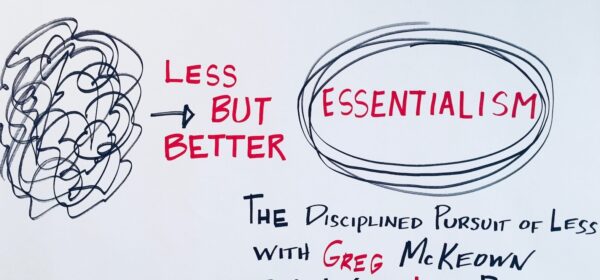
Improve your life by only focusing on the essentials

The right balance can lead to personal and professional growth

Make the right first impression, connect, build trust, then influence

Choose to thrive; 5 key strategies

Purpose, Vision, Values and Strategy

Powerful presenting for leaders

The future is uncertain. It is more important that you engineer agility and flexibility into your business than it is for you to know the future Mark Mullen, CEO of Atom

A company’s chair is the head of its board of directors; a CEO is it's top decision-maker who establishes strategic processes and ensures that progress is made toward corporate objectives.

A model to achieve change. The six logical levels are: purpose, identity, value/belief, capability, behaviour & environment

Realise deeply that the present moment is all you ever have. Make the Now the primary focus of your life
Comparing the darkest hour with the finest hour. Away from, towards

Make work more fun: 8 trends of progressive workplaces

Adapting your leadership style to each unique situation or task to meet the needs of the team or team members

Paying attention to the present moment with an accepting, nonjudgmental disposition

The three boxes of growing up

The three personas of your Advice Monster, and why staying curious a little longer is the secret to taming it.

Stop reports delegating you their problems

Creating organisations as amazing as the people inside them

Planning complex, multi faceted campaigns

Planning for how functions work towards a vision

Not telling; delegating an intent with freedom to operate within agreed boundaries

A surgical communication technique that ensures a shared understanding

Celebrate leadership as the everyday act of improving each other's lives

The Quest to Rediscover Microsoft’s Soul and Imagine a Better Future for Everyone

A model and language which describes the development of people, organisations and society

Five different ways in which people are inclined to make an impact and contribution

Organizing business and technology teams for fast flow

The Power of Diverse Thinking

Building Cause, Community and Career

The four ways to read people.

Untold Stories of the Highs and Lows of a Life in Sport ExecINSIGHT on 9-Mar-21

Why Humour Is A Superpower At Work And In Life ExecINSIGHT on 9-Feb-21

Who We Listen To, Who We Don't, And Why. ExecINSIGHT on 12-Jan-21

The Hidden Power of What You Say and What You Don't

What to do when you open your mouth and nothing comes out. To Meet the Author on 8-Sep contact me (below).

30 Ways to Fix Your Work Culture and Fall in

A Message for Uncertain Times

3 Vital questions

Culture and its importance to the management of organisational change

Slowly gaining momentum and eventually reaching a breakthrough
Lessons in leadership from the legendary Manchester United manager

Get a grip on your business

Seeing your conflict from their perspective

How to get what you want by saying what you mean

A simple template that rocks!

How a few companies make it...and the rest don't

Practical management

Real change doesn’t take hold until people actually change what they do

Mobilising people to tackle tough challenges and thrive

Timing is everything: rather than being an art, it's a science.

Why some leaders drain capability and intelligence from their teams while others amplify it to produce better results

People fit into Four Tendencies: Upholders, Questioners, Obligers, and Rebels that help shine a spotlight on hidden patterns in our behaviour.

XV powerful and practical lessons

Making big, hairy, audacious goals reachable

Creating the high performance organisation

How Your Business Can Conquer the Competition by Challenging Everything

Your influence hinges on what you communicate

Making change happen requires several variables to be right

Moral reasoning and behaviours go through six stages

Healthy management builds success

The end of the performance review

Clarifying roles and responsibilities gets the job done

Praise and recognition are considered stronger motivators than money

Drivers of trust for high performance, and vice versa

Engaging through Responsibility, Respect, Revenue-sharing, Reward, and Relaxation Time

Authoritatively or helpfully

What mentoring really means, and what it can do for you today

One of the easiest and most important ways to engage

Using Small Wins to Enhance Motivation -

Organisational and personal development based on a Team Management Profile

Social, task and self-oriented roles

The questions behind team development

There are six behaviour patterns that constrain highly competent and valuable performers

Developing a more effective model

A close trusted friend and confidant often tasked with challenging the boss to ensure subsequent plans are foolproof

The capacity a team has to accomplish goals or objectives

The process of transition around change

Planned, managed organisational change

An organizational analysis tool to assess and monitor changes in the internal situation of an organization

Commitment, ownership, responsibility and excellence

Managers account for as much as 70% of variance in employee engagement scores

An outward expression of an appropriate inner, or self, regard

A person whose behaviour, example, or success is or can be emulated by others

Standing your ground

Closely observing and/or controlling the work of subordinates

It's different and more complicated than imagined

Systems work best if they are kept simple

Fixing in the near term versus dreaming

Higher expectations lead to an increase in performance

Providing, processing and using information

The fear that serves as the greatest barrier to moving outside your comfort zone

Powerful and free!

First, second and third-person

The capacity to understand or feel what another person is experiencing from their frame of reference

Inform, persuade and promote

Being self-assured and confident without being aggressive

How individuals can be motivated to learn irrespective of their intelligence quotient

Defining how a team works, sets it up for success

The phases necessary for a team to grow, face up to challenges, tackle problems, find solutions, plan work, and deliver results

Keeping your virtual team aligned

By treating his crew as leaders, not followers, Marquet's sub went from worst to first

Growing "Up" from Opportunist through to Alchemist

From manager to subordinate-centred leadership

Just as essential to determining a company's value

Montgomery pioneered mixing freely with his soldiers, getting to know their problems first-hand, and offering solutions

Enhancing the motivation, morale, and job performance of followers

Agree to invest resources, mutually achieve goals, share information, resources, rewards and responsibilities, as well as decision-making and solve problems

Sharing power, putting the needs of others first and helping people develop and perform as highly as possible

Increasing the quality of communication

What the World's Greatest Managers Do Differently

Releasing people to do whatever it takes

Measures taken to offset or minimize damage to reputation, credibility, or public image

Motivation is largely intrinsic and can be divided into autonomy, mastery, and purpose

A simple method for goal setting and problem-solving

The fundamental causes of organisational politics and team failure

Indirect resistance to the demands of others and an avoidance of direct confrontation

Creating a climate, engaging, implementing and sustaining

The process of designing and running a successful meeting

Tools for talking when stakes are high

Leadership styles based on the concern for people and the concern for production

Formal rationality and substantive rationality

Giving ordinary people the power to lead and make a big change

Companies must campaign constantly to retain a competitive edge

Examining one's conscious thoughts and feelings

Getting more from your employees

A framework to help devise strategies for growth

A tool for analyzing competition of a business

Dominators who get preferential treatment

The role and the benefits

Helping employees develop work skills and behaviours; evaluating performance.

To help others develop – start with yourself

Using power positively

Authority and decision-making distributed throughout self-organising teams rather than a management hierarchy

Why some teams pull together and others don't

Ensuring that goals are consistently being met in an effective and efficient manner

The values and behaviours that contribute to the unique social and psychological environment of an organisation

Identifying and developing new leaders who can replace old leaders when they leave, retire or die

Making the best use of time

Learning about different business management styles

How to make extraordinary things happen in organisations

A proven model for leadership development

Six styles of providing direction, implementing plans, and motivating people

Understanding the generation after X

Being fully absorbed by and enthusiastic about work and acting to further the organization
Essential references and sources of advice for all new and existing directors, as well as those who aspire to this position